
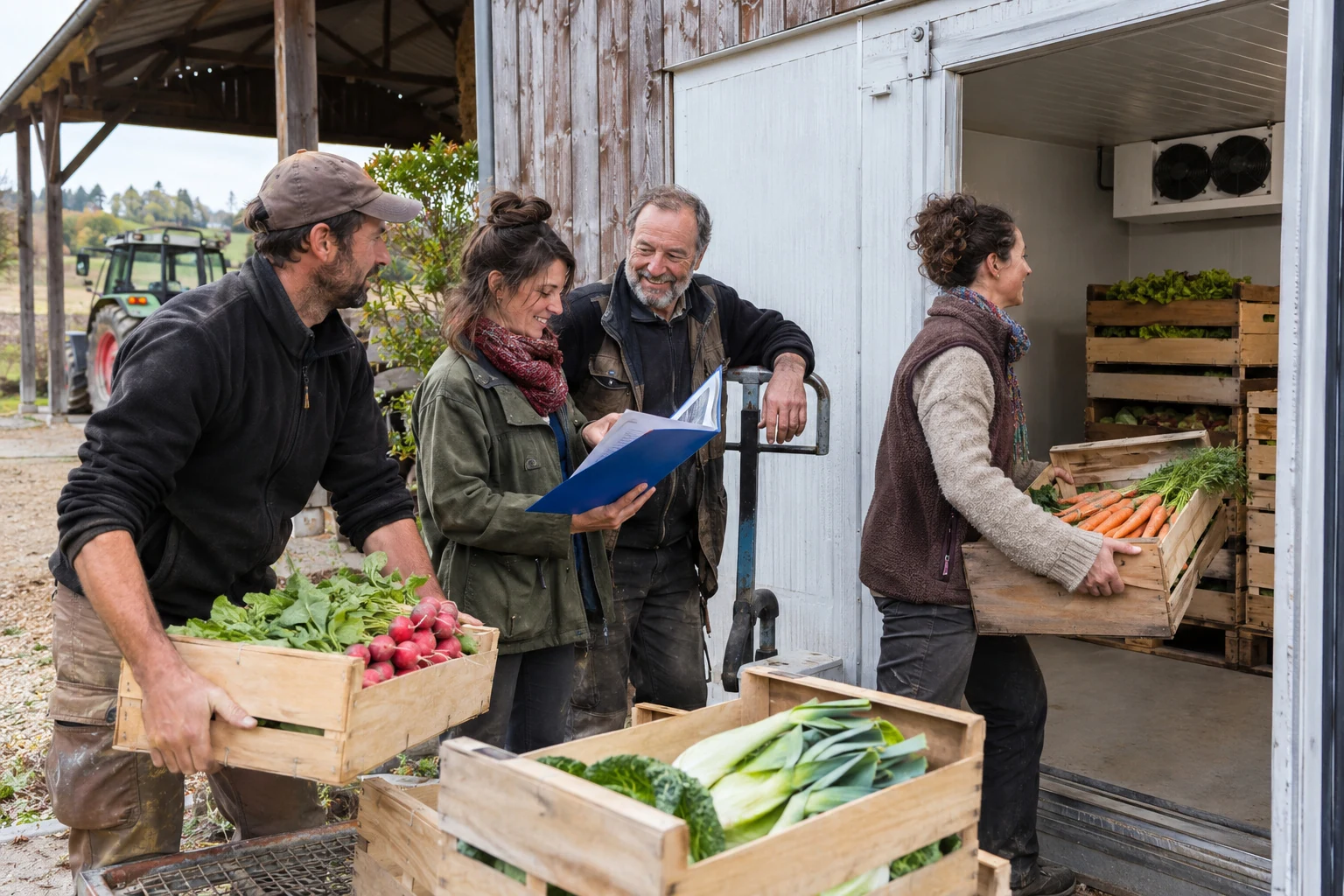
Size cold storage for the products actually handled
A cold room can extend marketing time, but its size and operating cost should follow the farm’s actual products and sales pattern. Document temperature requirements, peak volumes, loading arrangements and the reliability of the electricity supply. FSA’s Farm Storage Facility Loan program includes eligible cold-storage and handling facilities. Agricultural facility lenders offer another route for qualifying buildings. Separate the storage investment from processing, retail or other activities that may fall under different financing and regulatory conditions.
Connect storage finance with the distribution plan
Include refrigeration maintenance, backup arrangements, insulation, packaging and delivery vehicles in the business case. Shared facilities also need clear agreements on ownership, access, product segregation and responsibility for damaged stock. Assess whether additional sales and reduced spoilage are sufficient to pay for both the loan and higher running costs. A refrigerated space that remains partly empty still consumes power and capital. Confirm commodity eligibility, construction approval and the timing of expenses with the financing body before placing orders or starting site work.
Cold-storage and agricultural infrastructure finance
- FSA Farm Storage Facility LoansEligibility information for cold storage, handling equipment and other qualifying farm storage assets.Visit the organisation ↗
- Farm Credit East infrastructure loansFacility-finance options for agricultural buildings and related capital projects.Visit the organisation ↗