
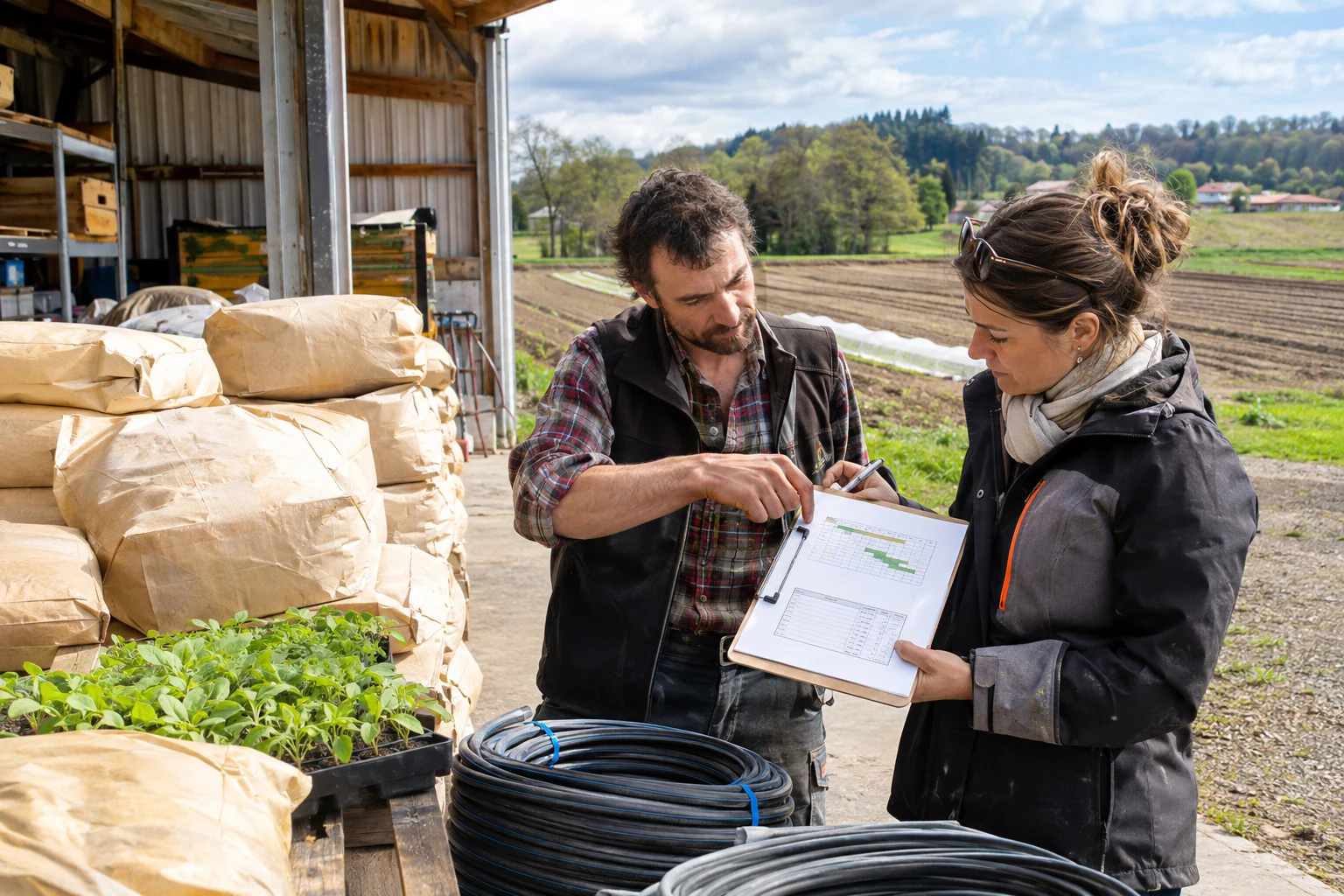
Measure the peak cash gap during production
Farm operating credit bridges the interval between paying production costs and receiving crop or livestock revenue. Build a monthly budget for seed, fertilizer, feed, wages, fuel and other recurring expenses to identify the highest expected borrowing balance. FSA offers operating loans for eligible family farms, while commercial agricultural lenders may provide revolving or nonrevolving facilities. A revolving line can permit further drawings after repayments, but only within the contract’s limit, availability period and continuing conditions.
Understand renewal and repayment conditions
Discuss when principal must be reduced, what information is needed for renewal and whether crop proceeds must pass through a designated account. Interest on drawn funds is only one cost; facility fees, unused-line charges and insurance requirements can also matter. A line that remains fully utilized after harvest may indicate that it is funding lasting losses or long-term assets. Separate those needs from the seasonal cycle so that the next planting period does not begin with insufficient available credit.
Operating-credit programs and lenders
- USDA operating-loan programPermitted operating expenses and eligibility for direct and guaranteed agricultural borrowing.Visit the organisation ↗
- Farm Credit East operating creditRevolving and nonrevolving options structured around agricultural cash receipts.Visit the organisation ↗